The best time to book a Bernina Express tour, leaving from Milan
The tours from Milan run on most dates through the year, so the question is which version of the line you want to see. Summer gives long days and green valleys, while autumn turns the larches gold and winter buries the pass in snow. Clouds can come in any season, and that shapes how to book more than the calendar does.
A line that runs through the year
The Bernina line is a working railway that runs every season, and none of the five listings on this site mentions a closed period. Expect departures on most dates, and check the calendar on the listing for your own.
What changes is the look of the line and the length of the day. The same climb from Tirano to the pass can look green and gentle or lie under deep snow, depending on when you go.
The weather on the day matters more than the season. A clear day in any month beats a cloudy one in the prettiest week, so the way you book counts as much as when.
Summer and its long days
Summer brings the longest daylight, which suits a twelve-hour trip that ends late in the evening. The valleys are green, and Lago Bianco near the top shows its milky turquoise color.
It is also the warmest time on the pass, though warm is relative at 2,253 m (7,392 ft). Bring a layer for the top, where the air can feel cold even when Milan is hot.
Summer is busy on the trains and in St. Moritz. The coach still gets you a seat. Streets and cafés fill up, though, which makes the 90 minutes in town feel shorter.
Autumn and the gold larches
In autumn the larch forests on both sides of the pass turn yellow and then gold. Several listings use these photos, and with the first snow on the peaks above, it is the most colorful version of the line.
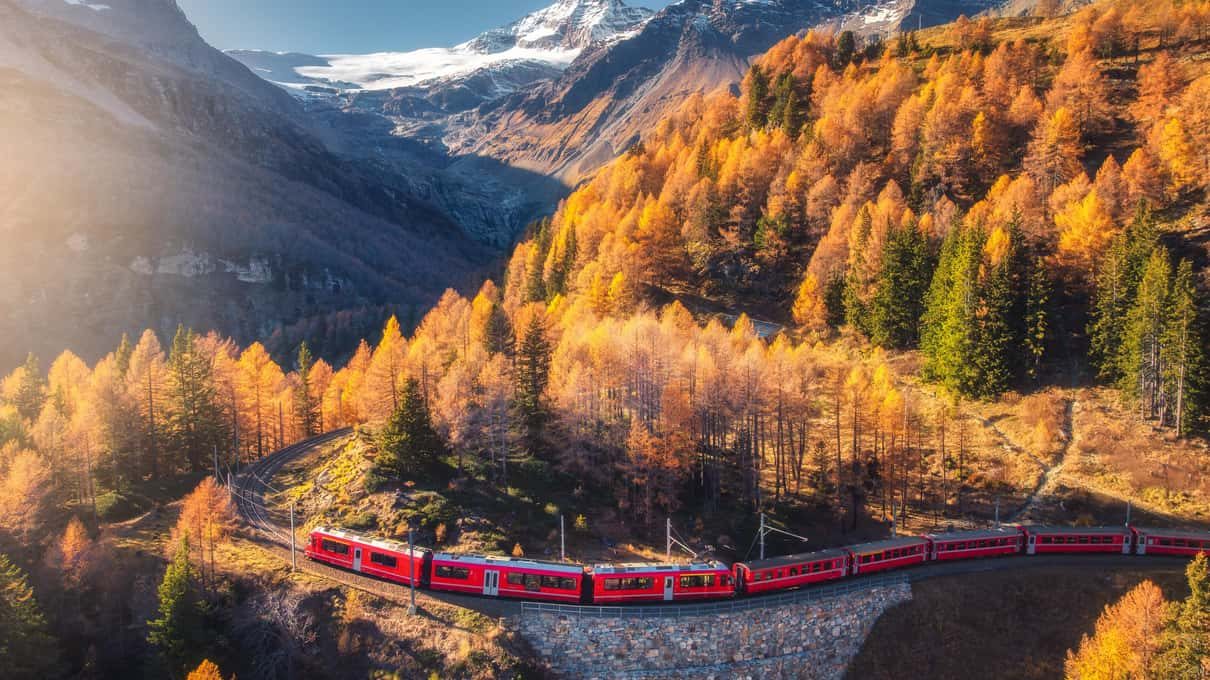
Reviewers mention snow on the pass in autumn, so the color can come with a cold wind. Our packing list for the day covers the layers and shoes that help.
Later in the autumn St. Moritz enters a quiet in-between season. Frigerio Viaggi's listing warns that some shops and restaurants keep shorter hours then, which matters if you planned a sit-down lunch.
Winter snow and early dusk
Winter turns the line into a white corridor, with snow banked beside the track and Lago Bianco frozen over. For many travelers this is the image they came for.
The cost is light. Frigerio's listing warns that from late October to late February the views from the train can fade in the late afternoon, because the sun sets early in the mountains.
That matters on tours that ride the train after the stop in St. Moritz. Ask which direction your date runs, and whether the train comes before or after the free time. Our guide to reversed days and Thusis endings covers what can change.
A full day that works in every season
TaoTravel rides the red train with windows that open, gives 100 minutes in St. Moritz and scores 4.8 from 1,500+ reviews on GetYourGuide. Free cancellation up to 24 hours before the day.
Winter windows also bring a choice. The red train's open windows let in cold air but give clear photos, while the panoramic car stays warm behind glass. Our page on the panoramic car or the red train weighs both.
Spring, a quiet in-between
Spring is the second quiet season in St. Moritz, when the ski crowds have left and summer visitors have not yet arrived. Frigerio's listing again mentions shorter opening hours for some shops and restaurants.
The valleys around Tirano turn green well before the pass does. Snow can lie on the top of the line long after it has gone from Milan, so the ride can feel like two seasons in one afternoon.
That mix suits photographers who like contrast, with green slopes low down and white fields near Lago Bianco. It also means warm layers stay in the bag for the top of the pass, even on a mild day in Milan.
Clouds come in any season
Rain in Milan says little about the pass, and sun in Milan says just as little. Mountain weather forms on its own schedule, so look at a forecast for St. Moritz or the Engadin rather than the city.
No season promises clear peaks. Cloud can sit on the glaciers in summer and lift on a winter morning, and no tour can guarantee the view from the pass.
The practical answer is to book the trip early in your Milan stay. If the forecast for the pass looks grim, you can move to a spare day later in the week instead of losing the trip.
All five tours offer free cancellation up to 24 hours before the start, and GetYourGuide lets you reserve now and pay later. That makes a quick change easier when the forecast shifts.
- Book for one of your first days in Milan, not the last
- Check the mountain forecast for St. Moritz two days ahead
- Cancel or move the date at least 24 hours before departure
- Read the operator's message on the day before for route changes
Picking a tour for your season
In short daylight, a tour that rides the train earlier in the day gives more light on the pass. In summer the order matters less, and the choice comes down to price and group size.
The price comparison of all five tours shows what each day includes. If you want the panoramic car for a winter ride, only Frigerio Viaggi's tour from ~$154 sells a guaranteed seat in it, if you choose that option at booking.
For the full ride in any season, our guide to what you see from the Bernina train lists the sights from Tirano to the top, so you know where to look.